Local business promotion
Fall Cleanup on a Mountain Lot: Drainage First, Leaves Second
Regional
On a slope, the most important fall chore isn't the leaves. It's making sure winter rain has somewhere to go.
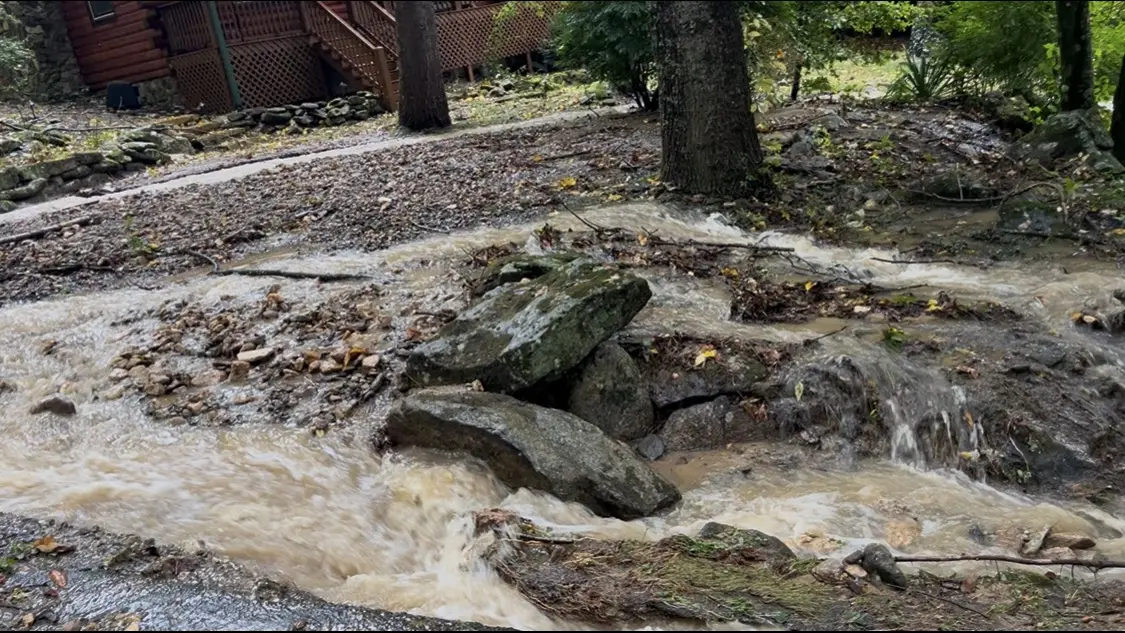
Flatland fall cleanup is simple: rake, bag, done. Mountain property doesn't work that way. When your house sits on a hillside, every leaf that lands in the wrong place becomes a dam, and every dam sends water somewhere you don't want it — across the driveway, against the foundation, or down the bank under your neighbor's road.
Helene taught a lot of us what water can do on a slope. Most of the damage around homes didn't start with a landslide. It started with a clogged pipe, a blocked ditch or a gutter that overflowed for hours.
So do the cleanup in the right order: water first, leaves second.
Step 1: Follow the water
On the next rainy day, put on a jacket and walk your property while it's actually raining. It's the fastest way to learn how your lot drains. Watch where water comes off the roof, where it crosses the driveway, and where it pools or cuts a channel. Take phone video. That one walk tells you more than a dry-day inspection ever will.
Step 2: Clear everything that carries water
Work from the top of the property down.
- Gutters and downspouts. Clean them after most of the leaves are down, not before. Check that every downspout empties at least a few feet from the foundation, and that the outlet isn't buried in leaves or mulch.
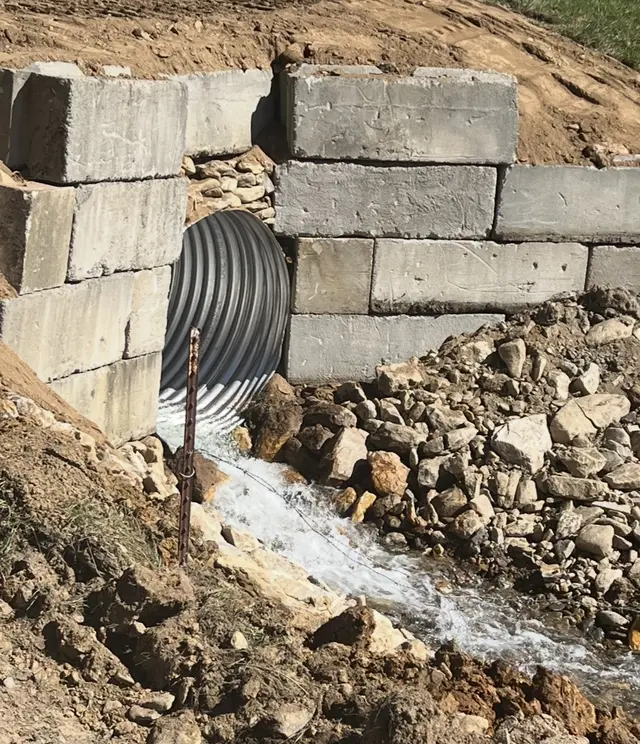
- Culverts. Find both ends of every pipe that runs under your driveway or road. Clear the inlet of leaves, sticks and silt. A culvert that's half full of debris can't handle a hard rain.
- Ditches and swales. Rake leaves out of roadside and driveway ditches. A ditch full of leaves stops working as a ditch.
- Drains. Pull leaves off yard drains, channel drains and French drain outlets. If a drain outlet sits at the bottom of a bank, make sure it isn't buried.
- Retaining walls. Look for the weep holes or drain pipes near the base and make sure they're open. A wall that can't drain the water behind it is under a lot more pressure.
Step 3: Now deal with the leaves
Here's the good news: you probably don't need to haul most of them away.
- Mow them into the lawn. NC State Extension recommends running over leaves with the mower several times until they're chopped into small pieces. They settle into the grass, break down and feed the soil. If the layer is too thick to mow, bag every other pass.
- Use them as mulch. Spread 3 to 6 inches of chopped leaves over garden and landscape beds. They hold soil in place on a slope, suppress weeds and break down into free fertilizer by spring.
- Compost the rest. Leaves are one of the best things you can add to a compost pile.
- Keep them out of the water paths. The one place leaves never belong is in a ditch, a culvert, a gutter or a drain.
Step 4: If you plan to burn
Burning leaves and brush is legal in much of the mountains, but there are rules.
- Get a permit first. In North Carolina, you generally need a free N.C. Forest Service burn permit to burn yard debris within 500 feet of woodland, which describes most mountain property. You can get one online at ncforestservice.gov/burnpermits.
- Burn only natural vegetation: leaves, branches and yard debris. No trash, lumber or plastics.
- Check for burn bans. When the state issues a burn ban, open burning is prohibited with or without a permit. After a dry stretch, check before you strike a match.
- Keep water and a rake close, stay with the fire until it's out, and don't burn on windy days.
Step 5: Look up
While you're out there, look at the trees close to the house, driveway and power line. Dead limbs, leaning trunks and branches over the roof are the ones that come down in the first ice storm. Mark them now and get them taken care of before winter, not after.
A simple fall checklist
- Walk the property in the rain and film where water goes
- Clean gutters after the leaves drop; check downspout outlets
- Clear both ends of every culvert
- Rake out ditches, swales and drains
- Check retaining wall weep holes
- Mow leaves into the lawn; mulch beds; compost the rest
- Get a burn permit and check for bans before burning
- Flag dead or leaning trees near the house, drive and lines
When to call for help
Some jobs are bigger than a weekend: culverts that are crushed, rusted through or undersized; ditches that have washed out or need to be regraded; erosion cutting into a bank; retaining walls that are leaning, bulging or cracking; and large trees near the house. Fall, before the ground freezes, is the time to get them looked at.
Sources
NC State Extension, Rowan County Center, Don't Blow It, Mulch It; N.C. Forest Service, Open Burning Permits in North Carolina. Business details from gamezproperty.com.