Local business promotion
After Helene: Retaining Walls, Slopes and Stonework to Check Before Winter Rain
Regional
Two years on, a lot of mountain walls and banks are still carrying stress from that storm. Here's how to read the warning signs before the next soaker.
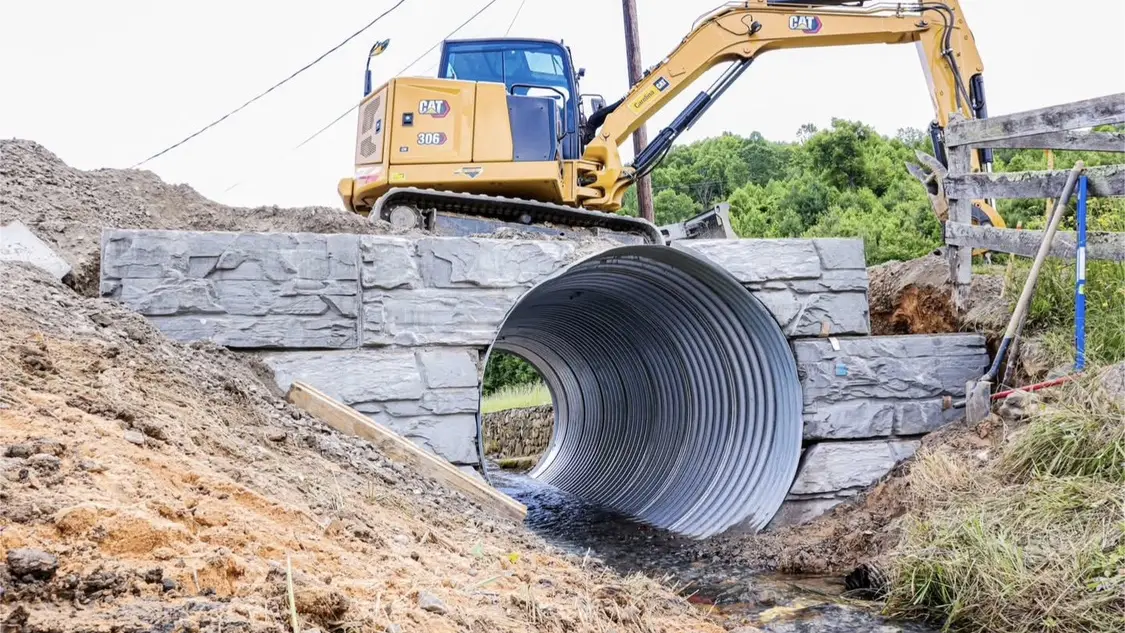
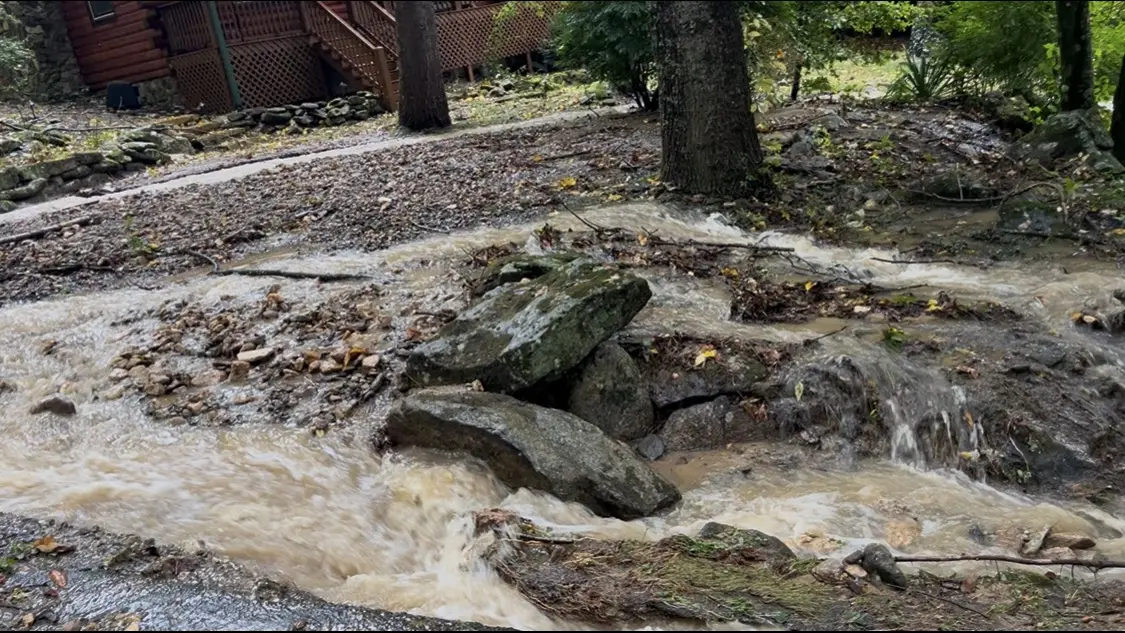
Hurricane Helene didn't just wash out roads. On thousands of mountain lots, it pushed water into places it had never been: behind retaining walls, under patios, into banks that had held for decades. Some of that damage showed up right away. Some of it is still showing up slowly, one hard rain at a time.
Winter is when it tends to get worse. Rain soaks into the soil behind a wall, freezes, expands and pushes. Saturated banks get heavier. And the ground stays wet for weeks.
You don't need to be an engineer to spot most of the warning signs. You just need to know what to look for, and to look before the wet season, not after.
Retaining walls: what a healthy wall looks like
A retaining wall's job is to hold back soil, and the soil's worst enemy is water. A well-built wall lets that water out. Behind the face there should be gravel backfill so water can drain down, and at the base there should be weep holes or a drain pipe where the water exits.
When water can't get out, it builds up behind the wall, adds weight and pressure, and eventually something gives.
Warning signs in a wall
Walk every wall on your property and look for:
- Leaning or bowing. Even a slight outward lean or a belly in the middle means pressure is building behind it.
- Horizontal cracks. These are more serious than vertical ones, because they usually mean the soil is pushing the wall outward.
- Open mortar joints in stone or block walls. Water gets in, freezes and pries them farther apart.
- Blocked or dry weep holes, especially after rain. If the holes are dry while the soil behind the wall is soaked, the drainage isn't working.
- Water staining, moss or soggy ground at the base of the wall or seeping through its face.
- Rotting timbers at the base of railroad-tie or treated-lumber walls. The N.C. Geological Survey notes that walls built from ties or stacked lumber typically last under 15 years and aren't suitable for protecting a home.
- Soil settling or cracking just behind the top of the wall.
Warning signs on a slope
The N.C. Geological Survey, which tracks landslides across the mountains, lists signs that a slope may be moving. On your own property, watch for:
- New or widening cracks in the ground, especially uphill of a bank
- Trees that lean, tilt or die, or roots stretched across cracks
- Bulging or lumpy ground at the foot of a slope
- Water seeping out of the slope, especially where soil meets rock
- Changes in how water drains across the property
- Cracked pavement, patios or masonry
- Doors and windows that start sticking, or walls, posts and rooflines that are no longer plumb
Any one of these is worth a closer look. Several together, especially near the house, mean it's time to call a professional now, not in spring.
Patios, steps and walkways
Hardscape tells you a lot about what's happening underneath.
- Pavers that have sunk, tilted or separated usually mean the base washed out or settled.
- Steps that rock or have pulled away from the house can become a fall hazard once they ice over.
- Mortared stone that's cracking along a line can point to movement in the ground below.
Fix the trip hazards before the first ice, and note anything that seems to be getting worse.
What you can do this fall
- Clear the weep holes and drain outlets at the base of every wall. A stiff wire or a garden hose usually does it.
- Redirect water. Make sure downspouts, driveway runoff and culverts don't dump water onto a bank or behind a wall. (See our fall cleanup guide for the full drainage walk-through.)
- Don't load the top of a slope. Keep firewood stacks, soil piles, parked equipment and new plantings that need heavy watering away from the edge of a bank.
- Take photos and measure. Put a level on a leaning wall, or set a stake and measure the gap to it. If the number changes over the winter, you have your answer.
What not to do
- Don't count on quick fixes like plastic sheeting or dumping rock on a moving slope. The Geological Survey specifically warns against relying on them.
- Don't pile soil or rock against the face of a leaning wall to "hold it up." That can trap more water and add more weight.
- Don't rebuild a tall wall yourself. The Geological Survey recommends engineered retaining walls for anything over about 4 to 6 feet, and many local codes require engineering or a permit at around 4 feet. Check with your county inspections office before you build.
When to call a pro
Call a masonry or hardscape contractor for walls that are leaning, bulging, cracking or not draining; for patios, steps and walkways that have heaved or sunk; and for drainage that needs to be rebuilt behind or around a wall.
For active slope movement — widening ground cracks, tilting trees, a house that's starting to show stress — call a geotechnical engineer. The N.C. Geological Survey's Asheville Regional Office also takes landslide hazard questions.
Sources
N.C. Department of Environmental Quality, N.C. Geological Survey, Recognizing Landslides; Look Smart Home Inspections, What Home Inspectors Look For When Inspecting Retaining Walls. Business details from gamezmasonry.com.